By Dr. Ara J. Deukmedjian, MD
Board-Certified Neurosurgeon
Medically reviewed on June 16, 2026
Medical Disclaimer: This content is for educational purposes only and does not constitute medical advice. Individual results may vary. Always consult with your healthcare provider about your specific condition and treatment options.
Key Points
✓ A three-level cervical fusion turning into a nine-level revision 20 years later is not a freak outcome. It’s a known complication called adjacent segment disease (ASD).
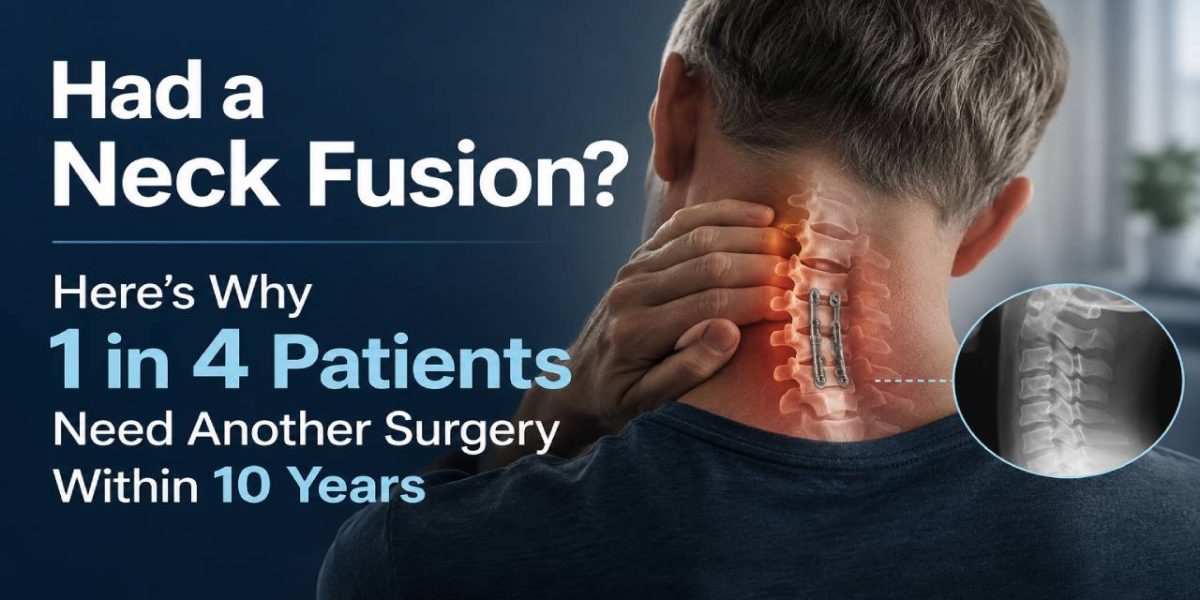
✓ About 25.6% of ACDF patients develop symptomatic ASD within 10 years of the original surgery, at a rate of roughly 2.9% per year. ¹
✓ The mechanism is biomechanical: fusing a segment forces the discs above and below to absorb extra load, pressure, and shear strain, so they wear out faster. ²
✓ Once ASD becomes symptomatic, the “fix” is usually a much longer fusion than the original. Often extending into the upper thoracic spine. ³
✓ Cervical disc arthroplasty preserves motion and shows significantly lower ASD and reoperation rates than ACDF in long-term trials. ⁴
✓ Deuk Laser Disc Repair® goes further: no fusion, no implants. It permanently treats herniated discs, bulging discs, DDD, sciatica, and radiculopathy through a 4-7 mm incision, with 99.6% pain relief and a 0.01% complication rate and preserves the motion that prevents ASD in the first place.
✓ The 25% ten-year ASD rate has been in peer-reviewed literature since 1999 and belongs in every informed-consent conversation about cervical fusion.
What This Online Story Is Describing
The account is unfortunately familiar. In 2004, a three-level anterior cervical fusion was performed at C5-6, C6-7, and what the post labels “C5-6-7.” A revision followed in 2005, most likely for non-union (pseudarthrosis), hardware issues, or persistent symptoms. For roughly two decades the spine compensated. Then in 2024, the discs above C5 and below C7 the segments that had been doing extra work the whole time. Failed and a fusion extending from C2 all the way down to T2 was required. That is a nine-level fusion surgery on top of what started as a three-level operation.
This is not a surgical error. It is the predictable long-term behavior of a fused cervical spine under daily mechanical load, and it has a name in the literature: adjacent segment disease.
Note: This article discusses a case shared publicly on social media. The person involved is not a patient of Deuk Spine Institute, and no individual medical advice is being given. The story is referenced only to illustrate a well-documented clinical pattern.
What Adjacent Segment Disease Actually Is
There are two related terms that get used interchangeably and shouldn’t be. Adjacent segment degeneration is a radiographic finding: the disc next to a fusion shows wear on imaging: loss of height, dehydration, osteophytes, facet hypertrophy, but the patient may feel fine. Adjacent segment disease is the clinical version: that same wear now produces symptoms, typically new radiculopathy (arm pain, numbness, weakness) or myelopathy (cord compression with hand clumsiness, gait changes, hyperreflexia) referable to the level above or below the original fusion. ⁵
The landmark study on this came from Hilibrand and colleagues in 1999. They followed 374 patients after anterior cervical fusion and reported an incidence of symptomatic ASD of approximately 2.9% per year, with a projected 25.6% of patients developing symptoms within 10 years of their index surgery. ¹ That number. One in four within a decade is the figure every cervical fusion patient deserves to hear before consenting.
Why the Discs Above and Below Wear Out
The cervical spine moves as a chain. Each motion segment shares the work of flexion, extension, rotation, and lateral bending with its neighbors. When two or three vertebrae are bolted into a single rigid block, that block contributes zero motion to the chain. The neck still has to move the same amount to look up, look down, check a blind spot, or sleep on a pillow, so the motion that used to be distributed across, say, five segments is now distributed across two. The discs at C4-5 (above) and T1-2 (below) are suddenly doing far more work than they were designed for.
Biomechanical studies have confirmed this directly. After anterior cervical fusion, motion at adjacent levels increases, intradiscal pressure at adjacent levels increases, and shear strain across the adjacent disc rises measurably. ² Over years and decades, those mechanical changes accelerate disc dehydration, annular tearing, bone spur formation, facet arthropathy, and ultimately stenosis and instability at the new “weakest link” in the chain.
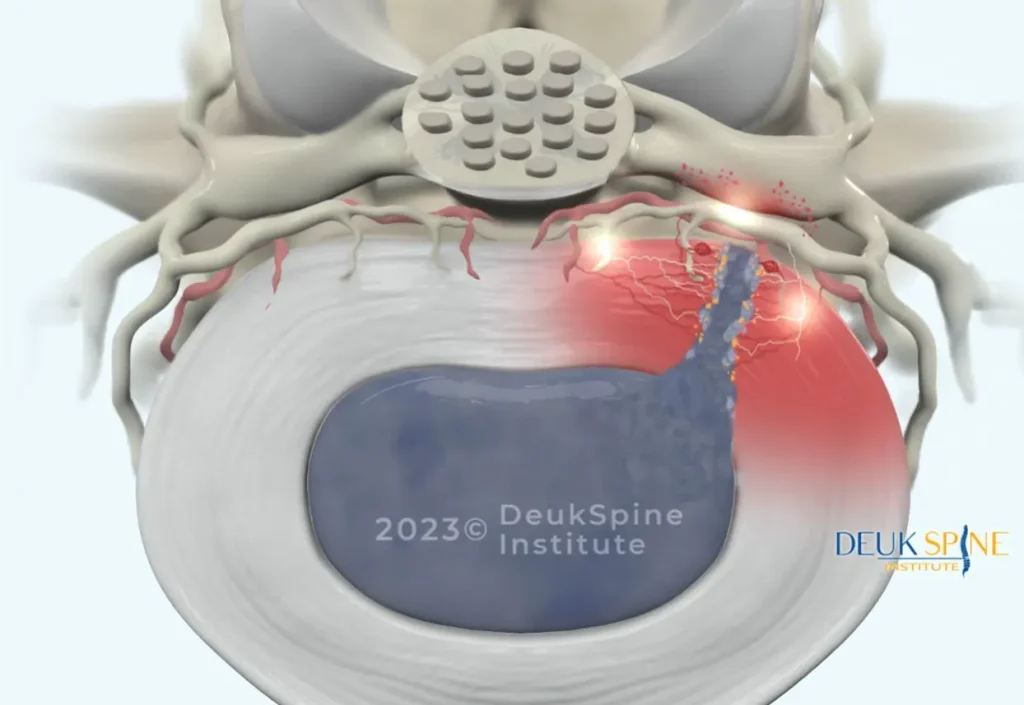
There is an ongoing academic debate about how much of adjacent segment disease is caused by altered biomechanics versus the natural progression of degenerative disc disease the patient already had. Both are real contributors. ⁶ But the practical implication for the patient is the same: once one level is fused, the levels next to it are statistically more likely to fail than levels in an un-fused spine, and the longer the follow-up, the higher the rate climbs.
Why the Revision Was So Much Bigger Than the Original
When ASD becomes symptomatic and surgical, the surgeon almost always has to fuse beyond the original procedure, not just one level above or one level below. There are several reasons for this.
First, by the time symptoms appear, multiple adjacent levels may already be degenerated. A patient with a C5-C7 fusion who presents 20 years later often has C3-4 and C4-5 changes above and C7-T1 and T1-T2 changes below. Fusing only the next level up can simply create a new “weakest link” that fails within a few years.
Second, restoring cervical lordosis, the natural inward curve of the neck. Usually requires incorporating more levels to get the alignment right. Loss of cervical lordosis is itself an independent risk factor for accelerated adjacent segment degeneration. ³
Third, the cervicothoracic junction (C7-T1) is a high-stress transition zone. If degeneration has reached that level, surgeons often extend instrumentation into the upper thoracic spine (T1, T2, or beyond) to anchor the construct in stronger bone and avoid junctional failure. That is exactly the logic behind the 2024 surgery described in the online post: C2 was chosen as the upper anchor for stability against the skull base, and T2 was chosen as the lower anchor across the cervicothoracic junction.
The result is a fusion that immobilizes nearly the entire cervical spine. It trades neck pain and nerve compression for a permanent and dramatic loss of motion. A real trade-off, and one that becomes harder to walk back the longer the fusion gets.
Did the Original Surgeon Have to Disclose This Risk?

This is where the frustration expressed in the online post is most legitimate. The 25% ten-year symptomatic ASD rate was published in 1999. ¹ The 2004 surgery happened five years later. The biomechanical mechanism was already well-described. A reasonably informed-consent discussion in 2004 should have included, at minimum: the risk of pseudarthrosis, the risk of adjacent segment disease over time, and the possibility of additional surgery. Sometimes much larger surgery could be needed in the future.
Whether that conversation happened in any individual case is between the person and their original surgeon. What is not in dispute is that the information existed and was published in mainstream peer-reviewed journals well before most cervical fusions were performed in the 2000s.
What Could Have Reduced the Risk
Two factors matter most, and a patient considering cervical surgery today should ask about both.
Avoiding fusion when a motion-preserving option is appropriate. Cervical disc arthroplasty (artificial disc replacement) is designed to maintain motion at the operated level. Long-term randomized trials and meta-analyses have shown that cervical arthroplasty produces significantly lower rates of symptomatic adjacent segment disease and significantly lower reoperation rates at adjacent levels compared with ACDF. ⁴ Arthroplasty is not appropriate for every patient: severe facet arthrosis, significant instability, and certain deformities are contraindications, but it should be on the table for the patients who qualify.
Avoiding fusion entirely when the underlying problem doesn’t require it. Most cervical radiculopathy comes from a herniated disc pressing on a nerve root, not from instability or deformity. Removing the herniated portion of the disc and decompressing the nerve, without fusing the segment, eliminates the source of pain while leaving the motion segment intact. When that option is technically possible, it preserves the very biomechanics that fusion sacrifices, and it leaves the adjacent levels alone.
Deuk Laser Disc Repair® takes that principle to its logical endpoint. DLDR is a minimally invasive, outpatient laser procedure performed through a 4 to 7 millimeter incision. Smaller than a dime; under light sedation. Using endoscopic visualization, a Holmium YAG laser removes only the inflamed, pain-generating tissue inside the disc: the torn annular fibers and the herniated nucleus pulposus that are pressing on the nerve. The disc itself, the surrounding bone, the ligaments, and the segment’s natural motion are all preserved. Nothing is fused. No metal hardware is implanted. No artificial disc is inserted. The body then heals the disc naturally over the following 9 to 12 months.
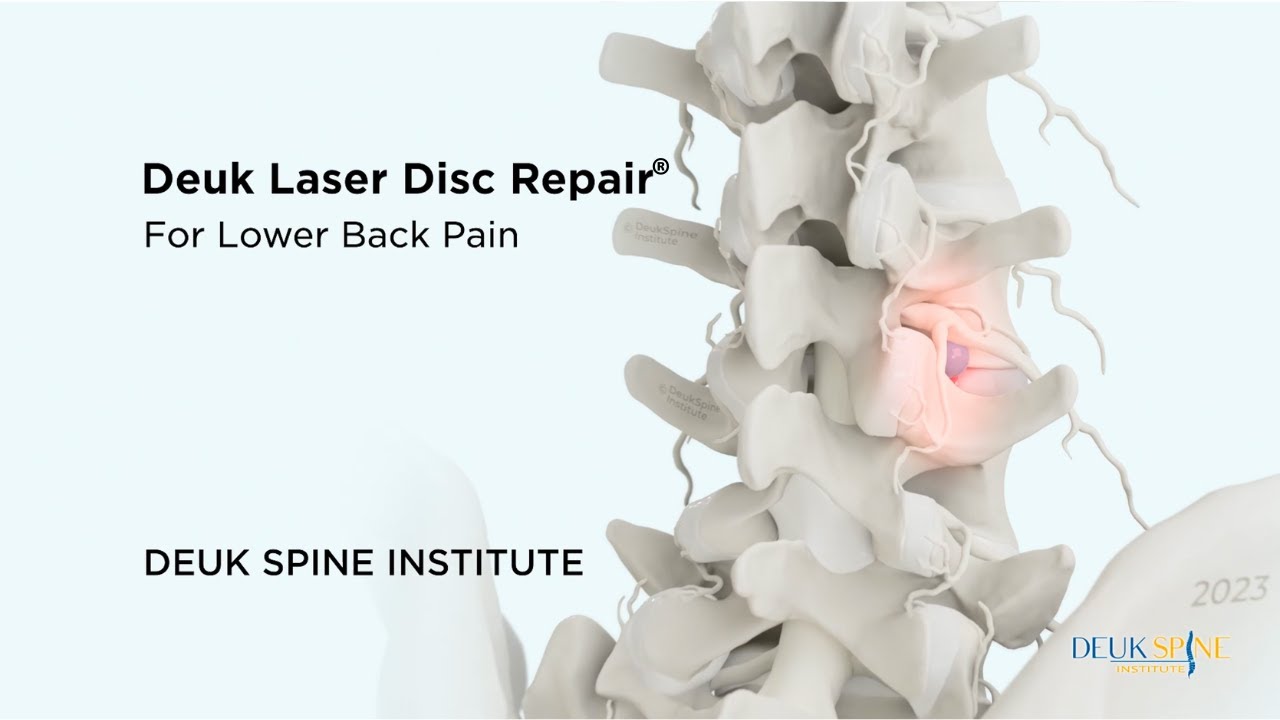
Across more than 2,750 procedures performed since 2004, Deuk Laser Disc Repair® has produced an average pain relief rate of 99.6%, a 0.01% complication rate, and a 0% infection rate and because the surgery preserves the operated segment’s motion and biomechanics, it does not set the adjacent discs up to fail the way a fusion does. It permanently treats pain from herniated discs, bulging discs, degenerative disc disease, spinal stenosis, sciatica, and radiculopathy at the source, in roughly 20 minutes per disc, with patients typically going home within an hour and returning to normal activities within three days. For the right candidate someone whose pain comes from a contained disc problem rather than true instability, fracture, or deformity. It is the option that most directly avoids the long-term cascade described in this article.
What You Should Do
If a cervical fusion has been recommended to you, ask three specific questions before consenting.
First, is my problem actually instability, deformity, or true mechanical failure that requires removing motion or is it a disc or nerve problem that a smaller, motion-preserving procedure could address?
Second, what is my personal risk of adjacent segment disease over the next 10 and 20 years, given the number of levels you plan to fuse, my age, my bone health, and my pre-existing degeneration at the levels you are not fusing? The answer should be specific, not reassuring.
Third, if I do develop adjacent segment disease in 10 or 20 years, what would the revision look like, and how many levels could that ultimately involve? A patient making a decision about a three-level fusion at age 50 deserves to understand that the conversation at age 70 may be about a nine-level fusion.
A second opinion before a cervical fusion is not a delay in care. It is the most reasonable step before agreeing to a permanent change in how your neck moves and a change that, decades later, may not stay limited to the levels you originally agreed to.
Frequently Asked Questions
What is adjacent segment disease?
Adjacent segment disease (ASD) is new, symptomatic degeneration of the disc or facet joints directly above or below a previously fused segment of the spine. Symptoms typically include new arm pain, numbness, weakness, or signs of spinal cord compression that weren’t present before. It is distinct from adjacent segment degeneration, which refers to wear seen on imaging without symptoms. ⁵
How common is adjacent segment disease after cervical fusion?
Symptomatic ASD develops at approximately 2.9% per year after anterior cervical discectomy and fusion, with about 25.6% of patients developing symptoms within 10 years of their index surgery. ¹ Rates continue to climb with longer follow-up.
Were surgeons required to warn about this risk in 2004?
The 25% ten-year symptomatic ASD rate was published by Hilibrand and colleagues in the Journal of Bone and Joint Surgery in 1999. ¹ The information was available in mainstream peer-reviewed literature well before most cervical fusions were performed in the 2000s. Whether it was discussed in any individual informed-consent conversation is a separate question that depends on the records of that visit.
Why does the revision often require fusing so many levels?
Once ASD becomes symptomatic, multiple adjacent levels are often already degenerated, cervical lordosis has usually been lost, and the cervicothoracic junction is a high-stress transition zone that requires strong anchoring. Surgeons frequently extend fusion to C2 above and into the upper thoracic spine below to create a durable, well-aligned construct, which is why a three-level original can become a nine-level revision. ³
Could a different surgery have prevented this?
Possibly. Cervical disc arthroplasty preserves motion at the operated level and has shown significantly lower rates of symptomatic ASD and reoperation than ACDF in long-term studies. ⁴ Non-fusion options that treat the disc or nerve directly, without sacrificing motion, also avoid the biomechanical changes that drive ASD in the first place. Whether either was appropriate in any given case depends on the specific pathology.
What is Deuk Laser Disc Repair, and how does it avoid the adjacent segment disease problem?
Deuk Laser Disc Repair® is a minimally invasive, outpatient laser procedure that permanently treats pain from herniated discs, bulging discs, degenerative disc disease, spinal stenosis, sciatica, and radiculopathy. Through an incision smaller than a dime, a Holmium YAG laser removes only the inflamed, pain-generating tissue inside the disc under endoscopic visualization. Because the segment is not fused, no implant is placed, and the natural motion of the disc is preserved, DLDR does not trigger the biomechanical overload at adjacent levels that drives ASD after fusion. Across more than 2,750 procedures, DLDR has produced a 99.6% average pain relief rate and a 0.01% complication rate.
Is fusion ever the right answer?
Yes, for true instability, significant deformity, certain tumors, infections, fractures, and select cases of severe multi-level stenosis with mechanical neck pain. Fusion is a powerful tool for those specific problems. The concern is the use of fusion as a default for problems that motion-preserving options could treat.
Sources
- Hilibrand AS, Carlson GD, Palumbo MA, Jones PK, Bohlman HH. Radiculopathy and myelopathy at segments adjacent to the site of a previous anterior cervical arthrodesis.
- Hilibrand AS, Robbins M. Adjacent segment degeneration and adjacent segment disease: the consequences of spinal fusion?
- Lee JC, Lee SH, Peters C, Riew KD. Adjacent segment pathology requiring reoperation after anterior cervical arthrodesis: the influence of smoking, sex, and number of operated levels.
- Badhiwala JH, Platt A, Witiw CD, Traynelis VC. Cervical disc arthroplasty versus anterior cervical discectomy and fusion: a meta-analysis of rates of adjacent-level surgery to 7-year follow-up.
- Kraemer P, Fehlings MG, Hashimoto R, et al. A systematic review of definitions and classification systems of adjacent segment pathology. Spine.
- Xu R, Bydon M, Macki M, et al. Adjacent segment disease after anterior cervical discectomy and fusion: clinical outcomes after first repeat surgery.